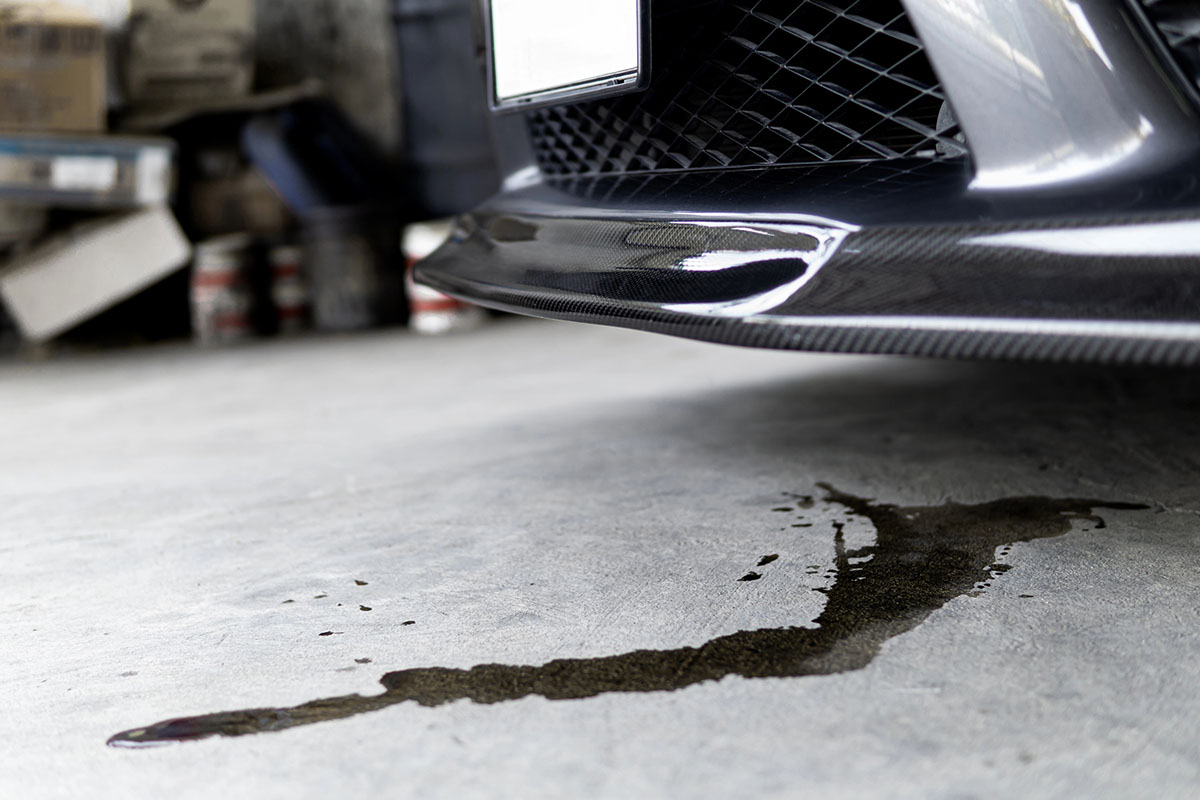
You drive over railroad tracks, a steep driveway, or a deep pothole. You hear or feel a hard hit underneath the vehicle. Now there’s a fresh spot of fluid under the car or a burning smell radiating in the car.
At that point most drivers ask the same question: is it safe to keep driving, or could I ruin the engine?
Impacts to the underside of a vehicle can damage critical parts that carry engine oil. Knowing what to look for and how to respond can be the difference between a simple tow and a complete engine replacement.
This guide walks through what usually happens when you hit something hard, how to check for an oil leak, and when you should stop driving and call for roadside assistance.

Table of Contents
What Can Get Damaged When You Hit Tracks or a Bump
Modern vehicles sit relatively low to the ground. Hitting a sharp rise or deep dip can push parts of the undercarriage into contact with pavement, metal tracks, or concrete.
Common components that can be damaged:
Oil pan
The metal or aluminum pan at the bottom of the engine can crack, dent, or even split if it hits something hard.
Drain plug

The plug used for oil changes can be knocked loose or stripped out, causing a fast leak.
Oil filter
On some vehicles the oil filter is mounted low and exposed. A hit can puncture or loosen it.
Oil cooler lines
Some engines have lines that carry oil to a cooler. These can be bent or torn open.
Gaskets and seals
The impact can disturb older gaskets or seals, leading to new leaks.

Even if damage is not obvious from above, a hard impact can create a small crack that turns into a serious leak the next time the engine warms up.
First Actions if You Suspect an Oil Leak
If you feel a hard impact and then notice any signs of leakage, do not ignore it.
Watch your dashboard
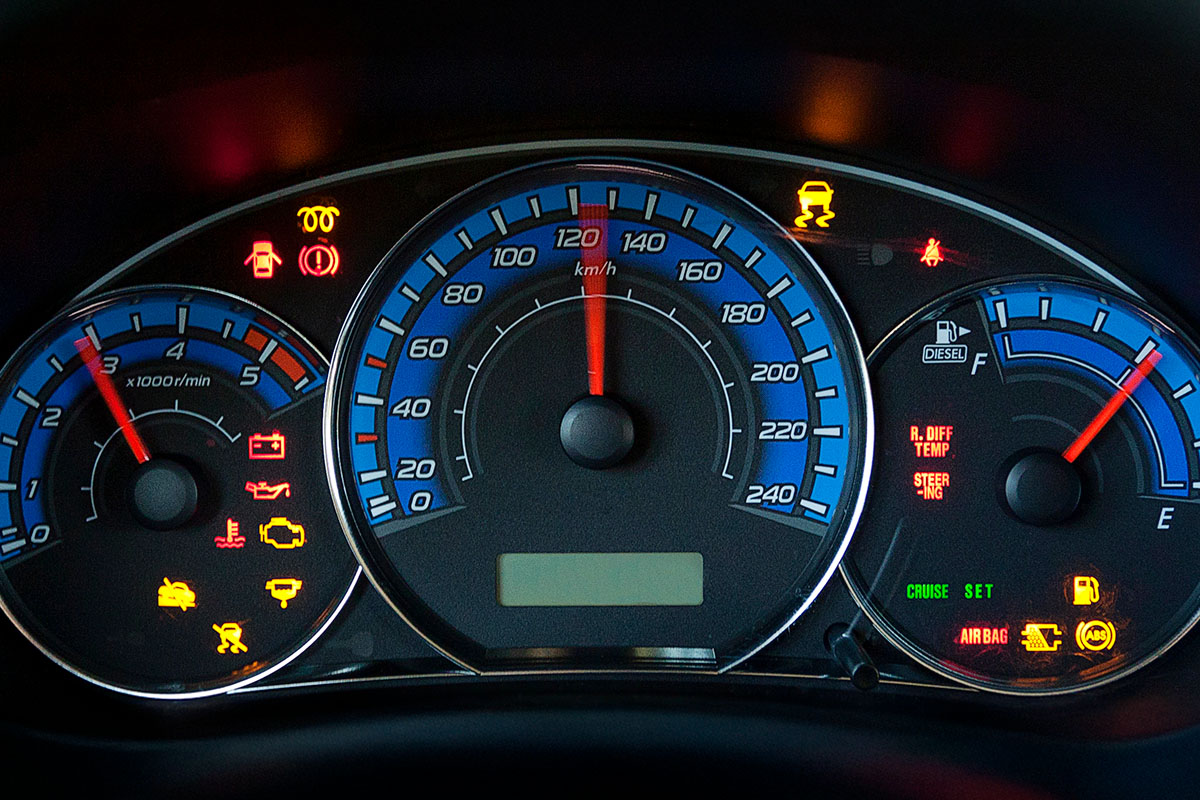
- If the oil pressure warning light comes on or you get a low oil pressure message, pull over and shut the engine off as soon as it is safe to do so.
- Do not assume it is a sensor issue after an impact.
Pull over safely and stop the engine
- Choose a safe shoulder or parking area.
- Turn the vehicle off immediately to stop oil circulation.
Look for obvious signs of leaking
- Check under the engine area for a fresh pool or continuous dripping.
- Note the color and thickness. Engine oil is usually brown to black and slippery.
Do not crawl under the vehicle on the roadside
- Traffic, unstable ground, and hot components all create hazards. Visual checks from the side and front are usually enough.
Check oil level only if it is safe and you know how
- If the vehicle is on level ground and cool enough, you can use the dipstick to check oil level.
- If oil does not register on the dipstick, do not restart the engine.
If you see a steady leak, a spreading puddle, or have a warning light, it is generally not safe to continue driving.
Is It Ever Safe to Drive with an Oil Leak After an Impact

There is no simple distance rule that is truly safe. In many cases, the only safe answer after an impact related oil leak is to tow the vehicle.
However, here is how to think about it:
Do not drive at all if:
- The oil pressure light is on or flashing.
- You hear knocking, ticking, or unusual engine noise.
- Oil is pouring or dripping steadily under the vehicle.
- There is a visible trail of oil behind the car.
You may cautiously move the vehicle a short distance only if:
- There is no warning light.
- No unusual engine noises are present.
- The leak, if any, is limited to a light damp spot with no active dripping.
- You’re moving to a safer nearby location such as a parking lot, not trying to drive across town.
Even in the second scenario, the risk is real. Oil can leak faster under load and at higher RPM. What looks minor parked may become major at highway speed.
The Verdict: When to Call a Tow Truck
If you see active dripping, a puddle forming, or if your oil light is on, it’s not safe to drive.
The risk is simply too high. An engine without oil generates immense friction and heat. The internal components: pistons, camshafts, and bearings, will weld themselves together or disintegrate. This is known as a seized engine.
A replacement oil pan might cost a few hundred dollars to fix. A replacement engine will cost several thousand dollars. The cost of a tow truck is a fraction of the price of a new engine. It’s the cheapest insurance policy you can buy in that moment.
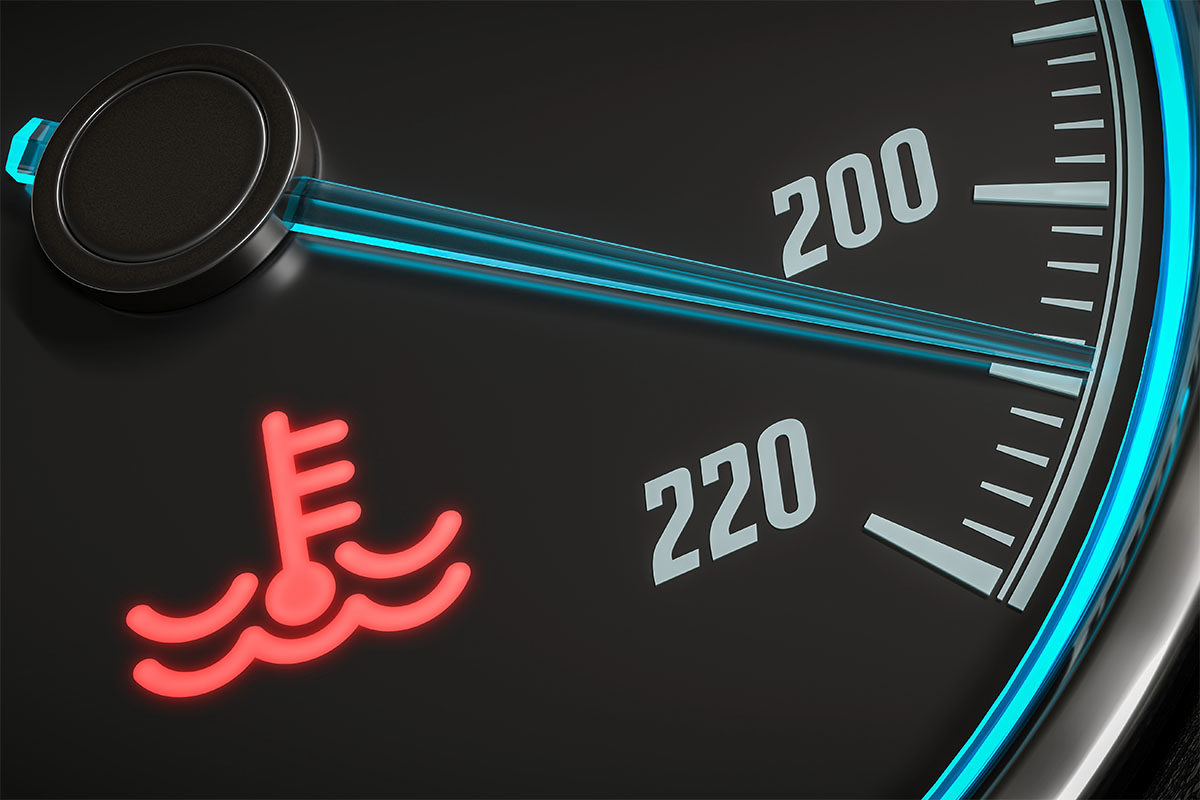
Even if the leak seems slow, wind resistance while driving will push the oil back onto the hot exhaust pipes, creating a significant fire hazard and a cloud of smoke.
FAQs
Can I use “Stop Leak” products to fix a cracked oil pan?
No. Chemical stop-leak additives are designed to swell rubber seals to stop minor gasket weeps. They cannot fix a physical crack in metal or plastic caused by an impact. Pouring these chemicals into a damaged engine will not stop the leak and may contaminate the oil that is left.
What if I just keep adding oil while I drive home?
This is a gamble you will likely lose. If the crack is small, you might make it. But cracks in cast aluminum can spread quickly as the metal heats up and vibrates. A slow drip can turn into a gushing hole halfway down the highway. Also, you’re spilling hazardous waste onto public roads. It’s not a professional or responsible solution.
I hit a bump and see clear water dripping. Is that bad?
If it’s a hot day and you have been running the A/C, clear water dripping from under the passenger side dashboard area is normal condensation. However, if the impact was severe, check it carefully to ensure it is not radiator coolant (which will have a sweet smell and a color) or windshield washer fluid reservoir damage.
Will my insurance cover oil pan damage?
If you have collision coverage, damage caused by hitting an object (like a rock, pothole, or tracks) is typically a covered claim. However, standard wear and tear is not. Since this is an accident caused by an impact, it usually qualifies. Check with your insurance provider, but be aware that your deductible will apply.
How far can I drive with a small oil leak?
Even a small leak can become serious quickly, especially after an impact. There is no guaranteed safe distance. If the leak started immediately after hitting something and you see fresh oil on the ground, it’s best not to drive at all and to arrange a tow.
The oil light came on briefly after a bump, then went off. Is that OK?
A flickering or momentary oil light after an impact is a red flag. The light means oil pressure dropped below a safe level, even if only for a moment. Have the vehicle inspected as soon as possible and avoid driving long distances until you know the cause.
Making the Smart Call
In the stress of the moment, the desire to just “make it home” is strong. But when it comes to oil leaks, patience is the strategy that only possibly protects your wallet. If you have hit an obstruction and see fluid, the vehicle is effectively disabled.
Hi-Way Towing’s roadside assistance and towing services exist precisely for this scenario. We have the equipment to lift your vehicle and transport it to a repair facility without turning the engine over. A careful decision in those first minutes often turns a bad moment into a manageable repair instead of a major loss.