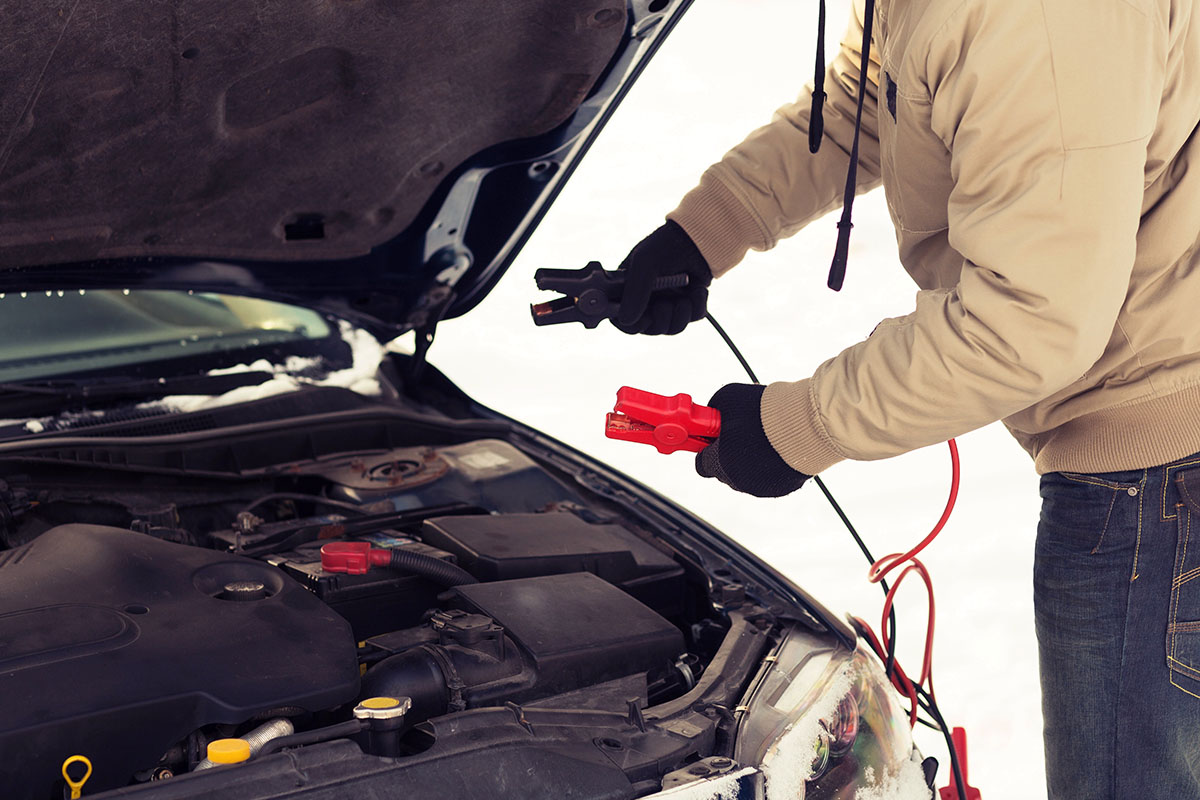
Cold temperatures can kill a car battery overnight. Knowing how to spot early warning signs, take simple preventive steps, and handle a sudden cold-weather breakdown will keep you safe and moving during the worst winter storms.
Table of Contents
Cold Weather Mechanics and Battery Chemistry
Cold weather hits car batteries with a two-part punch. First, dropping temperatures slow down the chemical reactions that generate electrical power. At 32°F, a standard lead-acid battery loses about 20% of its normal capacity. Once the mercury hits 0°F, starting power cuts by more than half.
Second, cold engines demand much more power to turn over. Engine oil thickens in freezing temperatures, creating heavy mechanical resistance against pistons and crankshafts. The starter motor has to pull massive amounts of current from an already weakened battery. If your battery is a few years old or has internal corrosion, this combination leaves you with a fast clicking sound or complete power loss.

You can spot a failing battery before winter hits. Pay attention to these warning signs during autumn:
- Engine cranking slower than usual
- Dim interior lights when turning the key
- Flickering dashboard lights during startup
Addressing these early signs prevents sudden failures during heavy snowstorms.
Cold-Season Battery Maintenance
Preventing winter breakdowns starts with simple terminal care and quick physical checks. Corrosion build-up around positive and negative posts blocks power flow, dropping voltage right when you need it most.
Testing Voltage and Cold Cranking Amps
A healthy, fully charged battery reads 12.6 volts or higher when resting with the engine off. Anything under 12.4 volts signals a partial charge that needs immediate attention.

Mechanics use load testers to measure Cold Cranking Amps (CCA), which shows how well a battery delivers power at 0°F for 30 seconds. If a load test shows your CCA output dropped below 70% of the rating printed on the label, buy a replacement before deep freezing sets in.
Daily Driving Habits
Your daily driving routines directly shape how long your battery lasts in winter. Quick trips under 10 minutes don’t give the alternator enough time to replace the energy spent during ignition. Add high-draw features like seat warmers, defrosters, and cabin heaters, and short drives steadily drain your power reserves. Schedule weekly drives lasting 20 to 30 minutes at highway speeds to give the alternator time to top off the charge.
When parking overnight during severe cold snaps, park inside a garage to block freezing winds. If you must park outside, point the front of the car away from direct wind to protect the engine bay from extreme chill.
Handling Roadside Battery Failures Safely
When a battery dies away from home, personal safety comes first. Getting stuck on a busy road or highway shoulder in winter creates real danger from cold exposure and passing traffic.
Safe Roadside Staging
- Pull completely onto the paved shoulder or off the roadway if the car is still moving.
- Turn on hazard lights right away to alert oncoming drivers in low visibility.
- Set the parking brake firmly so the vehicle won’t slide on icy pavement.
- Stay inside the cabin with your seatbelt fastened if you’re parked along a high-speed road.
- Keep snow clear from the tailpipe if running the engine briefly for heat, which prevents dangerous carbon monoxide buildup.
Jump-Starting Procedures
Jump-starting gives you a temporary way to move a stalled car to a safe repair shop. Check that the battery fluid isn’t frozen before attaching cables. Trying to jump-start a frozen battery can crack or explode the plastic casing.
Attach red jumper cables to the positive terminals on both batteries. Connect one black clamp to the negative terminal on the booster vehicle, then clamp the other black end to an unpainted metal engine piece on the stalled car. Start the booster car, let it run for a few minutes, then start the dead engine. Once it runs, leave the engine on so the charging system can do its job.
Arranging Emergency Towing Services
If jump-starting fails or internal cells suffer damage, you need a professional tow. Giving clear details to the dispatcher helps them send the right recovery truck on the first try.
Dispatch Call Checklist
- Exact Location: Street name, mile marker, or landmarks.
- Drive System: FWD, RWD, or AWD (determines flatbed).
- Clearance Issues: Low parking garage, narrow alley, etc.
- Hazards: Locked steering, tires stuck in snow.
Front-wheel drive, rear-wheel drive, and all-wheel drive vehicles each need specific towing setups to avoid drivetrain damage on icy roads. Flatbed tow trucks work best for winter transport because they lift all four wheels off slick roads, eliminating drag and stress on the drive system.

Mention if your steering wheel is locked, if tires are buried in snowdrifts, or if you’re stuck in a low-clearance parking garage. Clear details speed up response times and help operators pull your car out safely.
FAQs
How long do car batteries last in cold climates?
Car batteries generally last three to five years. Extreme winter cold wears out older cells fast, making replacement smart after four years of service regardless of how well the car seems to start.
Can a frozen car battery be recharged?
Never charge or jump-start a frozen battery. Let the casing thaw completely in a warm room, check the plastic body for cracks or leaks, and test cell health before hooking up power.
Why does a car battery click repeatedly when turning the key?
Rapid clicking means the starter solenoid isn’t getting enough voltage from the battery to start the engine. This points to low charge, heavy terminal corrosion, or weak internal cell connections.
Is it safe to leave a car idling to charge a dead battery?
Idling charges a battery slowly, but driving for 20 to 30 minutes gives you much better alternator output. If idling outside, check the tailpipe regularly to make sure snow isn’t backing up carbon monoxide into the cabin.
What details should I give when calling for winter towing?
Share your location, vehicle make and model, drive type (AWD, FWD, or RWD), current weather conditions, and specific mechanical problems. Let them know if the engine turns over or stays completely silent so they bring the right recovery equipment.
Staying Ahead of Car Failures
Regular checks remain your best defense against winter battery troubles. Test battery voltage every fall, scrub cable terminals clean, and swap out aging units before cold weather hits. When sudden electrical issues leave you stranded on frozen roads, prompt professional help protects your safety and your vehicle. For reliable emergency roadside recovery and flatbed transport, Hi-Way Towing provides experienced operators ready to assist in any weather.