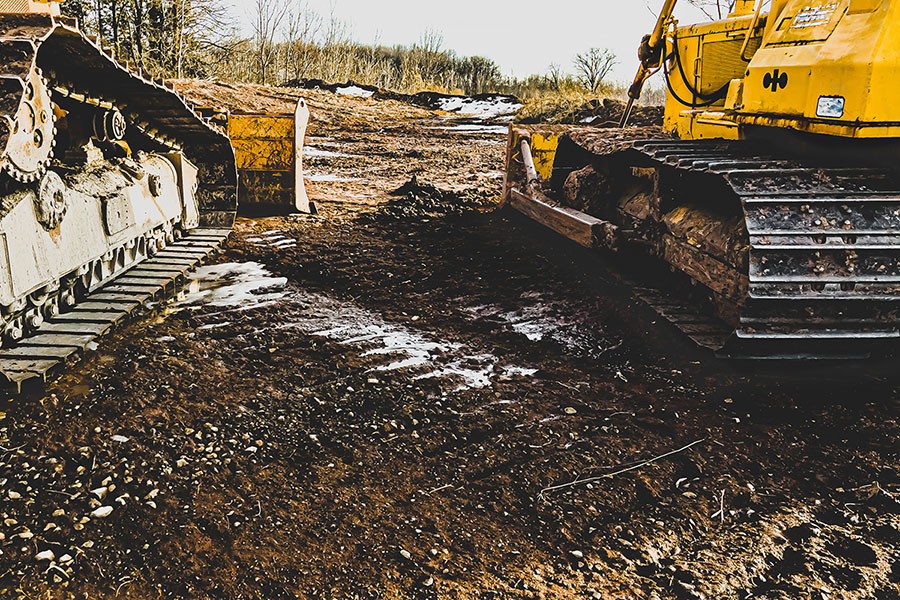
Construction schedules are tight. Equipment runs on uneven ground, unfinished surfaces, and recently graded areas all the time. When a truck, loader, or skid steer gets stuck in mud or soft soil, everything stops.
What looks like a minor problem can quickly turn into:
- Lost labor hours
- Delayed material deliveries
- Safety risks
- Additional equipment damage
Recovering heavy equipment takes more than a chain and a second vehicle. Hi-Way Towing’s recovery services are built to remove stuck machinery safely and efficiently without causing further damage.
The Physics of a “Stuck” Vehicle
To understand why a simple tow strap often snaps, you have to understand the forces at play. It’s rarely just about the weight of the stuck vehicle.
The suction factor
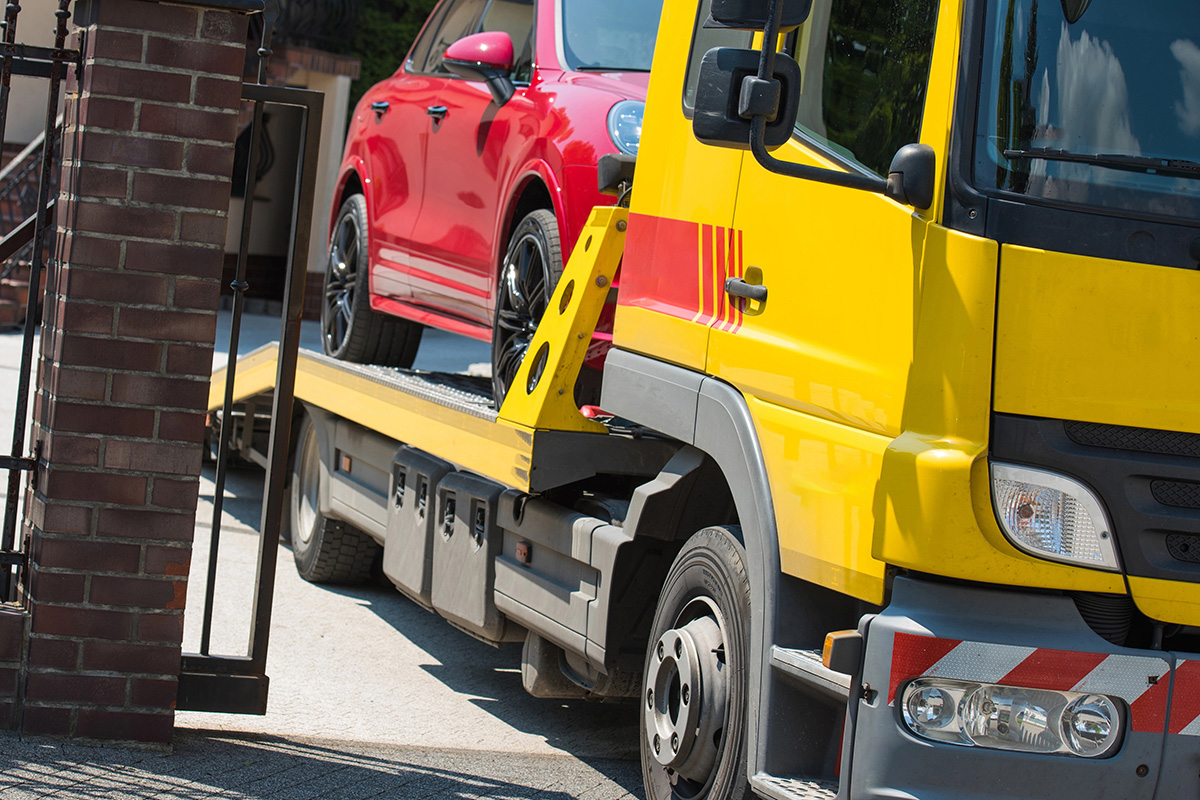
When a heavy machine sinks into mud or clay, the material forms a seal around the wheels or tracks. This creates a vacuum effect. You’re not just lifting dead weight; you’re fighting the suction of the earth. Deep mud can effectively double or triple the force required to move a piece of equipment. A 20,000-pound truck stuck in mud might need 50,000 pounds of force to pull free.
The angle of resistance
If a vehicle has slid off a temporary road or into an excavation pit, you’re fighting gravity and the grade. Pulling straight back often won’t work because the recovery vehicle can’t get traction. This situation calls for rotator capabilities: the ability to lift and pull from a vertical angle to break the suction and overcome the slope.
The risks of DIY recovery
Trying to recover heavy equipment with other site machinery is the leading cause of secondary damage and job site injuries during these situations.
- Equipment damage: Bulldozers and backhoes are designed to push and dig, not to handle tow shock loads. Using them for recovery puts enormous strain on transmissions, hydraulic systems, and frames. Ripped bumpers, bent axles, and torn hydraulic lines are common when crews use improper attachment points during a rushed recovery attempt.
- Catastrophic failure: When a chain or cable snaps under 50,000 pounds of tension, the recoil is lethal. Professional recovery crews use damping blankets and winches rated for specific loads to control this risk. An unrated chain grabbed from the back of a truck can lead to a tragedy that shuts down the entire site for an investigation.
The Professional Solution
When you call a professional towing service for site recovery, they bring specialized equipment designed to handle these extreme forces.
The rotator

The rotator is the most versatile tool in heavy recovery. It’s a massive tow truck with a crane-like boom that rotates 360 degrees. The operator parks the recovery vehicle on solid ground (pavement or a stabilized road) and extends the boom out to the stuck equipment. By lifting upward while winching backward, the rotator breaks the mud’s suction and reduces rolling resistance, pulling the vehicle out with precision.
Air cushion recovery
For overturned vehicles, like a dump truck that tipped while unloading, simply dragging it upright causes more damage. Recovery teams use heavy-duty air cushions inserted under the vehicle. These inflate to gently lift the vehicle back onto its wheels, preserving the bodywork and structural integrity.
Protecting the bottom line
The cost of professional recovery often gives site managers pause. But it needs to be weighed against what you stand to lose.
- Downtime: How much does it cost per hour for that machine to sit idle?
- Secondary damage: What’s the repair bill for the transmission on the stuck truck, or the machine that tried to pull it out?
- Site disruption: A stuck truck often blocks access roads, stopping material deliveries and halting work for other trades.
A professional team works fast. They assess the situation, rig the vehicle correctly, and extract it in a fraction of the time it takes to organize a risky DIY attempt. That gets the equipment back into production faster and protects the project’s profitability.
FAQs
Do I need to unload the vehicle before recovery?

Usually, yes. If a dump truck is stuck while fully loaded with gravel or concrete, the extra weight makes recovery harder and more dangerous. Dumping the load (if possible) or offloading it reduces the extraction force needed and lowers the risk of the truck tipping during the pull.
Can you recover equipment that has tipped over?
Yes. “Uprighting” is a standard part of heavy recovery. Using rotators and air cushions, we can roll excavators, cement mixers, and cranes back onto their wheels or tracks. It’s a careful process to make sure fluids (oil and fuel) are contained and the cab isn’t crushed further.
What information do I need to provide when calling?
To send the right truck, the dispatcher needs to know:
- The type of vehicle (make/model and estimated weight).
- The nature of the situation (stuck in mud, tipped over, slid down an embankment).
- Site access (is there hard pack nearby, or is it all mud?).
- Whether the vehicle is loaded or empty.
Will the recovery damage the vehicle?
The goal of professional recovery is zero additional damage. By connecting to the manufacturer’s designated tow points or using axle straps and frame hooks, professionals distribute the load safely. Amateur attempts often pull on bumpers or tie rods, which causes damage. Professional recovery is the safest way to move a stuck asset.
Can heavy equipment be damaged during recovery?

If recovery is done improperly, yes. That’s why using trained professionals with rated equipment matters. Proper attachment points and controlled winching reduce the risk of structural damage.
How quickly can heavy-duty recovery respond?
Response time depends on location and availability, but established towing providers prioritize construction and commercial calls because of the operational impact. Clear site information helps speed dispatch.
Can you recover equipment at night or in bad weather?
Yes, professional recovery teams are equipped for various conditions. Weather and visibility may affect response and extraction time, but safety always comes first.
Keeping Your Project Moving
Construction sites come with unpredictable conditions, and stuck equipment is sometimes unavoidable. What matters is responding quickly and correctly.

Heavy-duty recovery services are built to restore mobility safely, minimize equipment damage, and get your operation running again with as little disruption as possible.
Having a reliable towing and recovery partner lined up before you need one is one of the simplest ways to protect your schedule and your equipment. Hi-Way Towing has the rotators, winches, and experience to work in any construction environment. We focus on getting your equipment out safely so you can focus on hitting your deadlines and keeping the job site productive.