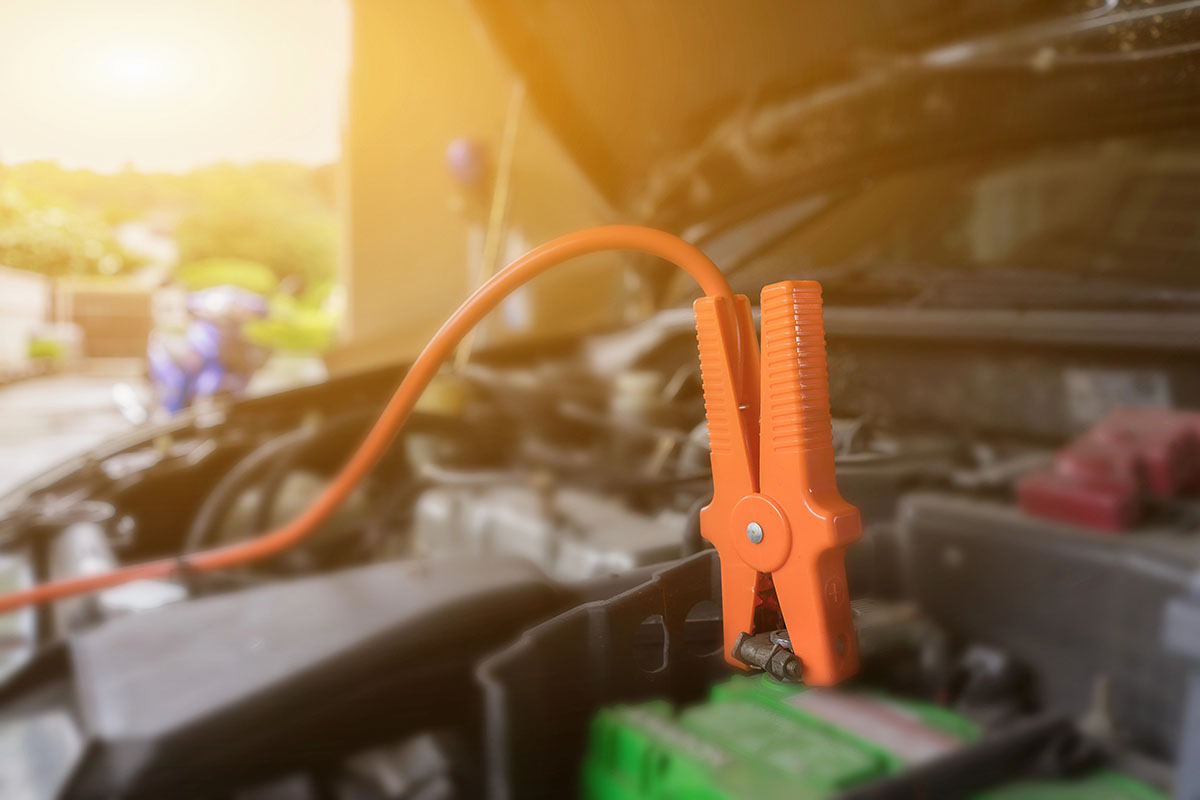
Summer weather strains automotive cooling systems, air conditioners, and electrical setups. High ambient temperatures destroy lead-acid car batteries far faster than freezing winter conditions. Extreme heat accelerates internal chemical degradation, leading to sudden vehicle power loss when parked at home or on the road.
When an engine fails to crank, drivers must decide between a jump start or a complete battery replacement. Evaluating battery age, physical condition, and charge symptoms helps determine the correct repair approach.
Table of Contents
Thermal Degradation: Why Summer Heat Destroys Batteries
Texas summers regularly bring ambient temperatures above 90 degrees Fahrenheit, pushing under-hood engine bay temperatures past 140 degrees Fahrenheit during operation or after parking. Liquid electrolyte inside lead-acid batteries consists of a mixture of sulfuric acid and water. Excessive engine bay heat causes the water portion of this mixture to evaporate through casing vents.

When water levels drop, the tops of the internal lead plates become exposed to oxygen. This exposure causes rapid oxidation and lead plate corrosion. Oxidized plates lose active surface area, permanently reducing the cold cranking amps (CCA) the battery can deliver to start the engine.
Heat also accelerates internal chemical activity. Chemical reactions double for every 18-degree Fahrenheit rise in temperature, accelerating grid corrosion inside the cells. This accelerated activity shed internal plate material, which settles at the bottom of the casing. Over time, accumulated sediment creates an internal short circuit between positive and negative plates, resulting in immediate voltage collapse.
Evaluating a Failed Battery: Boost vs. Replacement
Determining if a vehicle needs a quick boost or a new battery depends on whether the unit suffered a temporary discharge or permanent structural damage.
When a Jump Start Works
A jump start supplies external voltage directly to the starter motor, bypassing the discharged battery to start the engine. Once running, the alternator supplies electrical current to power the vehicle’s ignition and recharge the battery. Jump starts work effectively when a healthy battery loses voltage due to temporary external draws rather than internal cell damage.

A jump start serves as the correct fix when:
- Headlights, cabin lights, or auxiliary accessories remained powered while the engine was off.
- The vehicle sat parked for multiple weeks, allowing parasitic draws from anti-theft systems or keyless entry modules to drain the charge.
- The battery is under three years old and shows no physical swelling, cracking, or fluid loss.
Driving the vehicle for 30 consecutive minutes at highway speeds allows the alternator to restore the surface charge on a healthy, discharged battery.
When Replacement Is Required
A jump start will not restore a battery suffering from internal plate damage, plate sulfation, or shorted cells. Applying external power may start the engine, but the unit will fail to hold a charge once turned off.
Full replacement is necessary when:
- The battery age exceeds three years under East Texas driving conditions.
- The engine cranks slowly or struggles to turn over consistently on warm starts.
- The casing shows physical expansion, bulging side walls, or visible cracking from internal heat pressure.
- Heavy corrosion buildup (white, blue, or green powder) covers the battery terminals, cables, or holding brackets.
- The battery emits a strong sulfur or rotten egg odor, indicating fluid evaporation and chemical over-gassing.

Relying on repeated jump starts with a defective battery forces the vehicle alternator to run at maximum output constantly. This extra load overheats the alternator diodes, causing mechanical failure and expensive electrical system repairs.
Electrical Risks of Self-Servicing Modern Vehicles
Jumping modern cars, trucks, and crossovers requires precise power delivery. Modern vehicles contain multiple electronic control units (ECUs), sensitive sensors, and delicate infotainment screens. Self-servicing with improper equipment or incorrectly placed jumper cables creates severe electrical risks.
Connecting jumper cables in reverse polarity generates massive voltage spikes that melt internal fuses, damage body control modules, and ruin engine management computers. Stray sparks near heat-damaged battery vents can also ignite vented hydrogen gas.
Professional roadside assistance technicians use voltage-regulated jump packs with polarity protection. These systems limit voltage spikes, protecting sensitive onboard electronics while providing safe amperage to turn over the starter motor.
Standard Protocols for Stranded Drivers on Roads

Experiencing a dead battery along Loop 323 or Broadway Avenue presents safety hazards, especially in extreme summer heat. Following structured steps protects both the vehicle operator and the electrical system:
- Park safely away from traffic lanes, engage the emergency brake, and turn on hazard lights.
- Turn off all accessories, including air conditioning fans, radios, heated seats, and exterior lights to reserve remaining electrical current.
- Avoid repeatedly turning the ignition key if the engine fails to crank, which prevents starter motor overheating.
- Stay inside the air-conditioned cabin or in a shaded area away from roadways while waiting for service dispatch.
- Call a local roadside provider equipped with battery testing and jump start tools.
Professional Roadside Diagnostics and Battery Service
Roadside assistance technicians perform rapid diagnostic steps before jumping or towing a vehicle. Technicians use digital battery testers to measure cold cranking amps, internal resistance, and open-circuit voltage. This test verifies whether the battery can hold a charge or if cell degradation requires immediate replacement.
If the battery tests healthy, the technician uses a commercial jump pack to start the engine cleanly. Once started, a secondary multimeter check across the battery terminals verifies alternator voltage output. Correct alternator output reads between 13.8 and 14.7 volts with the engine running. Readings below 13.5 volts indicate an alternator failure rather than a battery issue, requiring flatbed transport to a repair facility.
Preventive Battery Maintenance for East Texas Drivers
Drivers can reduce sudden battery failures in hot climates through basic regular maintenance routines:
- Inspect battery terminals monthly for loose connections or corrosion accumulation.
- Clean corrosion from terminals using a baking soda and water mixture applied with a wire brush.
- Ensure the battery hold-down clamp remains tight to prevent engine vibration from loosening internal cell connections.
- Park vehicles in garages or shaded structures whenever possible to lower under-hood ambient temperatures.
- Schedule digital battery load tests during routine oil changes once the unit passes two years in service.
FAQs
How long does a car battery last in East Texas?

Car batteries in East Texas typically last between 3 to 4 years due to severe summer heat. High under-hood temperatures accelerate fluid loss and plate corrosion faster than in cold climates.
Can driving a car fully recharge a dead battery?
Driving can recharge a healthy battery that was drained by left-on accessories. It cannot recharge a battery with broken internal plates, shorted cells, or severe fluid evaporation.
Why do batteries fail more often in summer than winter?
Summer heat creates the physical damage inside the battery by evaporating electrolyte fluid and corroding internal lead plates. Winter cold causes thick engine oil and slower chemical reaction rates, which exposes the damage created during the summer.
Is jumping a car with a swollen battery safe?
No. Swollen battery cases indicate internal heat buildup, blocked vents, or shorted cell plates. Attempting to jump a swollen battery can cause chemical leaks or electrical sparking.
What causes a vehicle to die immediately after a jump start?

If an engine stops running as soon as jumper cables are removed, the alternator is failing to produce enough electrical current to run the ignition system. The vehicle requires towing to a service shop for alternator repair.
Direct Emergency Assistance in Tyler
Hi-Way Towing provides roadside assistance and wrecker service across East Texas. Modern service trucks carry diagnostic tools and jump packs to clear dead battery calls safely without damaging modern vehicle computer systems. When battery failure or alternator breakdown leaves a car immobile, call Hi-Way Towing at (903) 581-1821 for immediate service dispatch.