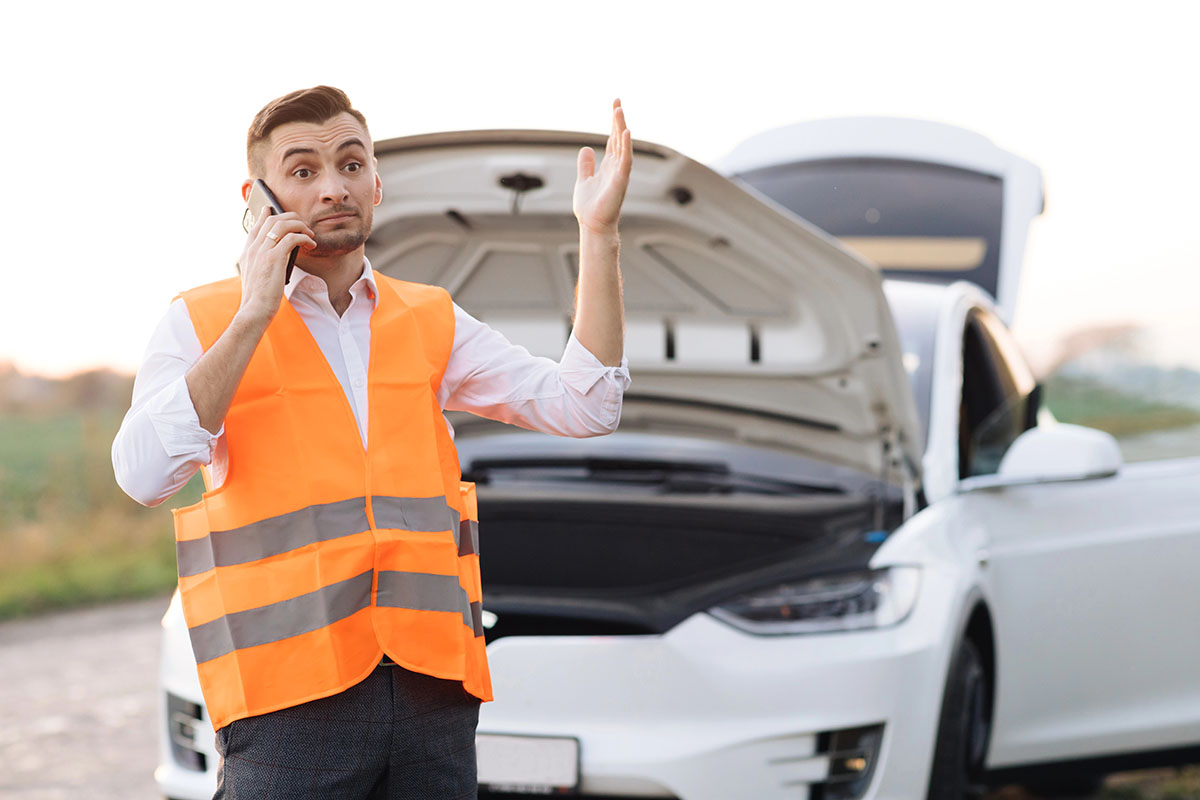
Electric vehicles are common on Central Texas roads now, Teslas, Rivians, and Ford Mustang Mach-Es show up at every charging station and school pickup line. But EV adoption has outpaced roadside knowledge. When one breaks down or runs out of charge, the Tyler towing approach that works fine on a gas car can destroy an EV’s drivetrain.
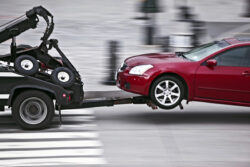
Dolly tows and two-wheel lifts have been the default for decades. On a gas car, that’s fine: pop it in neutral, lift the front wheels, haul it away. Try that with most EVs and the repair estimate frequently runs into five figures, sometimes more than the car is worth.
Table of Contents
Why Towing spins the motors
A gas car has a transmission with a neutral position. Neutral disconnects the engine from the drivetrain, so the wheels can spin without pulling the engine with them.

EVs don’t have a neutral equivalent. The wheels connect directly to the electric motors with no way to physically disengage them. That same direct connection is what makes regenerative braking work: lift off the throttle and the spinning wheels turn the motors backward, generating electricity that feeds back into the battery.
Drag an EV with its drive wheels on the ground and those wheels spin. The motors turn with them. Two failures kick in at once.
First, the motors start generating electricity, but the vehicle is powered down, so the system isn’t set up to receive it. That uncontrolled current flows through the inverter, battery management system, and motor controllers. These components aren’t rated for unmanaged voltage spikes, and they can burn out. Replacing an inverter alone often costs several thousand dollars, parts and labor.
Second, the drivetrain’s oil and coolant pumps only run when the vehicle is on. Tow the car with the power off and those components spin dry. Bearings and gears heat up fast without lubrication, and the damage can be permanent after only a short distance.
Both failures compound each other. You’re pushing uncontrolled electricity into a system that isn’t ready for it, while the mechanical parts run without lubrication. Either one alone can cause serious damage. Together, they frequently total the drivetrain.
The only safe method: Flatbed Transport
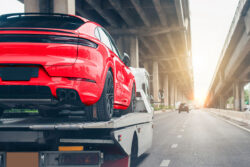
Tesla, Rivian, Ford, GM, and Hyundai all specify flatbed transport in their EV owner’s manuals. A flatbed lifts all four wheels clear of the ground, so the motors stay still, no electricity is generated, and the drivetrain isn’t stressed. There’s no manufacturer-approved alternative.
A flatbed loads the entire car onto its platform, all four wheels off the ground, strapped down, going nowhere. The drivetrain sits completely passive for the whole trip. No wheel rotation, no motor engagement, no risk. If you want the EV to arrive exactly as it left, a flatbed is the only method that actually delivers on that promise.
FAQs
My EV is an all-wheel-drive (AWD) model. Does that change how it’s towed?
Yes, and it makes the flatbed requirement stricter, not looser. An AWD EV has motors on both axles, which means there’s no such thing as a “free” wheel on this car. Hook it to a hook truck and you’re spinning drive motors on at least one end, possibly both. Damage isn’t a maybe; it’s a when.
I ran out of charge. Can’t you just give me a “jump-start”?
No, and the reason comes down to how EVs are built. A gas car’s 12-volt battery is a small, low-voltage system that responds to a boost from another vehicle. An EV’s traction battery is a high-voltage pack, 400V in most models, 800V in some, and jumper cables don’t interface with it. Some mobile services can add a small amount of range via a portable charger, but it’s typically a slow trickle. In most roadside situations, a flatbed to the nearest fast charger is the faster, more reliable call.
I saw a tow truck pulling a Tesla with two wheels on the ground. Was that wrong?

In most cases, yes. Operators trained on gas vehicles often default to what they know, hook the front, drag it. Unless that driver had wheel dollies positioned under the drive axle (a legitimate but uncommon workaround), those rear motors were spinning the entire distance. The driver may not even realize the damage is happening; it accumulates silently in the motor windings and seals.
What should I tell the towing company when I call?
Two things, stated early and clearly: “I have an electric vehicle, and I need a flatbed.” Don’t wait for the dispatcher to ask, lead with it. That phrase flags the right equipment and routes the call to a driver who knows EV handling procedures. If the dispatcher says “we’ll see what’s available,” push back. Waiting an extra 30 minutes for the right truck beats having a hook truck show up and do it wrong.
Can you jumpstart an electric vehicle?
Yes, but only the 12-volt auxiliary battery, not the traction pack. The 12V system powers the screens, computers, and door locks, and you can boost it exactly like a gas car. That gets the car awake enough to shift into neutral. What you cannot do is charge the main high-voltage battery with jumper cables. Getting drive range back requires a proper charging station, not a boost.
What is “Tow Mode” or “Transport Mode” in an EV?
Tow Mode is a setting found in the touchscreen menu on most EVs. Activating it releases the parking brake and disables the car’s automatic braking response, the system that would normally apply the brakes the moment it detects unexpected movement. Without it, the car can resist the flatbed operator during loading. With it, the car rolls freely onto the platform. It’s built for that specific situation: getting four wheels onto a trailer. It does not make the car safe for conventional towing behind another vehicle.
- Will towing an EV with the wheels down really cause a fire?
The short answer is yes, it can. When the drive motors spin without active cooling or power management online, they generate heat through both friction and electromagnetic induction. That heat can melt wiring. In severe cases, especially with a battery pack already under stress, it can trigger thermal runaway: a chain reaction inside the lithium-ion cells that is extremely difficult to stop once it starts. Manufacturer flat-tow restrictions exist because this failure mode is real, not as liability boilerplate.
Is it more expensive to tow an electric vehicle?
Generally yes, though not dramatically. EVs require a flatbed regardless of circumstances, wheel-lift and dolly options are off the table, so you’re paying flatbed rates from the start. Electronic parking brakes often can’t be manually released, which adds labor. If the 12V auxiliary battery is dead (a separate battery from the main pack that controls locks, door handles, and the brake system), the operator may need special equipment just to get the car into neutral. That extra step adds time and cost to what would otherwise be a straightforward call.
Can you tow an EV to charge it?
“Tow-charging”, pulling a dead EV so the motors spin and regenerative braking adds range, comes up often in EV owner communities. It doesn’t hold up in practice. Regenerative braking at tow-rope speeds generates too little power to meaningfully restore range, a sudden stop by the towing vehicle creates a real collision risk, and the abrupt load changes can damage drivetrain components. Every major EV manufacturer advises against it. If you’re stranded, a flatbed to the nearest DC fast charger is faster and safer than experimenting with alternatives.
Protecting Your EV’s Drivetrain With the Right Recovery
EVs now account for a significant share of new vehicle sales, and the towing industry is still catching up. These aren’t difficult vehicles to move, but they are unforgiving of shortcuts. A wheel-lift tow that costs a gas-powered car nothing can destroy an EV’s drivetrain in a matter of miles. The difference between a $0 inconvenience and a multi-thousand-dollar repair often comes down to one question: did the driver know to ask for a flatbed?
Hi-Way Towing runs flatbed-equipped trucks because that’s what EVs require, not occasionally, every time. Our Tyler roadside assistance operators know how to handle electronic parking brake lockouts, dead 12V auxiliaries, and the other complications that come up with modern electric vehicles. If your EV needs a tow, our tow trucks in Tyler TX are set up for it.